So you're interested in
Adoption
This page is a great starting point for you to find the type of animal you are interested in. Once you have selected the type of animal you would like to know more about please follow the link to see what we currently have available.
Please know that we have animals being surrendered on a daily basis so if you don't see what you want please keep checking back as every animal deserves an amazing home!
Our Adoption Process. Go through this before reaching out Adopting from us is not an overnight process. There are multiple steps and a lot of information we need to convey to you so you are fully set up for success when you get your new family member home. We will always be here for you every step of the way, but let's first go through what will happen. Initial Contact During this step, you will speak with an adoption coordinator. They will go over our expectations and answer any questions you have about what will be happening, so please do not hesitate to ask! Our adoption coordinator will review a lot of information that may seem overwhelming at first, but you are NOT alone on this journey. Learning about the Available Animals After you talk to our adoption coordinator, they may recommend a specific animal based on your conversation. The wonderful part of working with our coordinators is that they are in touch with the fosters and can provide information about each foster's temperament and behavior. You may have seen an animal on our pages that interests you. If so, please let the coordinator know. Also, understand that because of the communication we have between coordinators and fosters, we may have information indicating it would not be the best match. For example, we have found that some of our animals do better with adults, while others prefer being around kids. Again, we want to set you up for total success by matching the best animal to your family and needs. You are not on this journey alone! At this time, you will most likely be asked to fill out the Adoption Contract. Enclosure and Lights Once you have an idea of the animal that best suits you and your situation, our coordinator will guide you through the enclosure process. We have recommended sizes and brands of the actual enclosure that your animal will be sleeping in. There are specific reasons why we provide these recommendations. Some of our animals are very large, so they need a large enclosure. The enclosure MUST be front-opening. Animals do better with front-opening enclosures, where, when you go to get them out, you come in at their level, and they can get excited. We never recommend a top-opening enclosure because animals get very scared when something comes over them. People are much larger than reptiles, and we want to prevent the possibility of you getting bitten or them getting overly stressed out. The actual enclosure is not the only thing you will purchase or discuss during this step. There are also lights, which are extremely important. You will need to get a basking lamp and a linear UVB lamp. We have information in a different section on why the linear UVB is required for the reptile's health; we also have information about the brands you can choose from. It may seem like a very picky step to only accept these brands, but please trust us that we are getting you the best brand for your family member. There are people researching how well UVB lights work, and unfortunately, only 2 brands consistently deliver what is needed. You will also be getting additional items that make up the enclosure, like the basking platform, and other things that make their home fun for them (and, of course, you). Pictures and Feeding Once your enclosure is set up, you will need to take pictures of the enclosure and the temperatures so we can make sure everything is correct. This will help you be successful when your new animal comes home! During this step, our coordinator will also talk to you about what kind of foods you will want to feed your chosen reptile, and what you need to avoid. As with lights and enclosures, there is a lot of misinformation out there, and we want to avoid your having to find a vet because your reptile gets sick from eating something it shouldn't have. Supplements needed will also be discussed during this step, so you know which vitamins to purchase and how or when to use them. Setting a Pickup Time Once you have reached this step in the process, have been fully approved, and are ready for your new family member, you will be put in touch with the person fostering your animal to set up a mutually convenient time and location for pickup. We know you are excited and want your family member as quickly as possible after waiting this long and going through every step, and we want to make that happen, but fosters may have jobs or other commitments that make same-day pickup impossible. Please understand that we are all volunteers doing our best for the animals, and for you. Pickup and What's Next Once the day, time, and location have been decided, make sure you have a carrier to take your new family member home. Our fosters will bring the new family member in their personal carriers to meet you, but we do not provide these to new families because we have so many animals going to homes. You have your new family member at home now and realize that you have questions, guess what? We are STILL here for you, and we WANT to hear from you! We LOVE updates on the antics of the animals that we have fostered. We WANT to answer your questions or talk about something you've seen and didn't know about. We consider you part of our North Texas Reptile Rescue family, and we are not going anywhere. We are here to help make this successful for you in the long term.

Bearded dragons are one of the most rewarding reptile companions, combining sweet personalities with a curious, adventurous spirit. Many enjoy spending time with their people, whether that means relaxing on a lap, riding on a shoulder, or watching the world from a favorite perch. They are naturally inquisitive and love exploring safe spaces, climbing, and investigating anything new in their environment.
Proper care is essential for a healthy and happy dragon. Bearded dragons require a quality linear UVB light to support calcium absorption and overall health, along with a temperature gradient that allows them to regulate their body temperature. Adults need a basking area of 100–110°F and a cooler side between 75–85°F. Because they are active reptiles, larger enclosures are strongly recommended. A 4' x 2' x 2' enclosure is considered the minimum size for an adult, but larger habitats offer more opportunities for exercise, exploration, and enrichment, and allow for proper lighting and temperature gradients. The enclosure should be large enough to allow the UVB light and basking area to work effectively while giving the dragon plenty of room to roam.
A balanced diet is equally important. Adult bearded dragons thrive on a diet consisting mostly of fresh greens and vegetables such as collard, mustard, and turnip greens, with appropriately sized insects offered as a supplemental source of protein. In general, adult dragons should eat more greens than bugs.
With proper lighting, nutrition, space, and care, bearded dragons can live 10–15 years or longer. Their gentle nature, entertaining personalities, and love of adventure make them wonderful companions for both new and experienced reptile keepers.
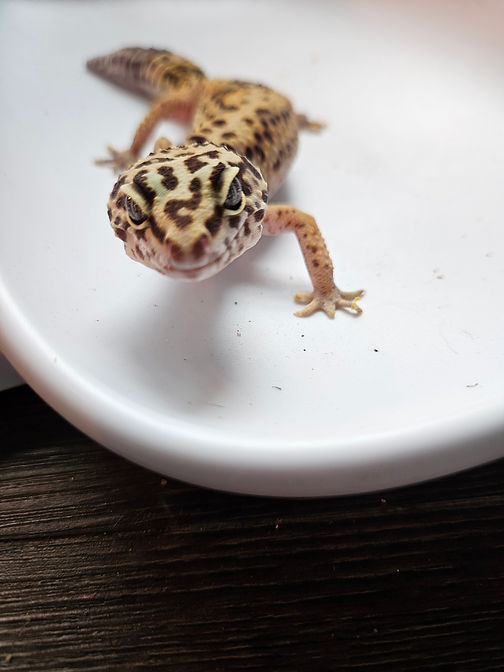
Geckos make fascinating companions and come in a wide variety of species, each with its own unique appearance, personality, and care requirements. While some geckos are outgoing and curious, others are more reserved and prefer to observe the world from the safety of their favorite hide. Many become comfortable with their caregivers over time and can be enjoyable pets to watch and interact with.
Providing proper husbandry is essential for a gecko's health and well-being. Most species require appropriate heating, lighting, humidity levels, and secure hiding places that allow them to feel safe and regulate their environment. Enclosures should be sized appropriately for the species and provide opportunities for natural behaviors such as climbing, exploring, burrowing, or hunting, depending on the gecko's needs.
Diet varies by species, but many geckos thrive on appropriately sized insects that are gut-loaded and dusted with calcium and vitamin supplements. Some species may also require specialized diets or fruit-based foods. Researching the specific needs of the species you are interested in is an important part of successful gecko ownership.
One of the things that makes geckos so appealing is the incredible diversity within the group. From the expressive eyes of leopard geckos to the climbing abilities of arboreal species, geckos offer something for nearly every reptile enthusiast. With proper care, patience, and respect for their individual needs, geckos can be healthy, engaging companions for many years.
Because gecko species vary significantly in their care requirements, adopters will receive detailed husbandry information specific to the gecko they are adopting. Our goal is to ensure that every gecko is placed in a home that is prepared to meet its unique needs and help it thrive for years to come.


Snakes are fascinating reptiles that come in a wide variety of species, sizes, and personalities. Many captive snakes become calm, predictable companions that tolerate handling well and can thrive with proper care. Whether they are active explorers or content to observe from their favorite hide, snakes offer a unique and rewarding pet-keeping experience.
Proper husbandry is essential for a healthy snake. All snakes require a secure enclosure, appropriate heating, fresh water, and places to hide and feel safe. Temperature, humidity, enclosure size, and substrate needs vary by species, as snakes come from many different environments. Some species thrive in drier conditions, while others require higher humidity and specialized substrates to maintain their health.
At North Texas Reptile Rescue, we strongly encourage feeding frozen-thawed prey rather than live prey whenever possible. Frozen-thawed feeding is safer for both the snake and the prey animal while still providing complete nutrition. Feeding schedules and prey sizes will vary based on the snake's species, age, and size.
One of the most rewarding aspects of snake ownership is the diversity they offer. Because care requirements can differ significantly between species, adopters will receive detailed husbandry information specific to the snake they are adopting. Our goal is to ensure every snake is placed in a home that is prepared to meet its unique needs and help it thrive for years to come.


Our "Other Reptiles" category includes a variety of species that may not fit into our dragon, gecko, or snake sections. These animals can include monitors, tegus, chameleons, tortoises, and other unique reptiles that occasionally come through the rescue. Each species brings its own personality, behaviors, and husbandry requirements, making them exciting and rewarding companions for the right home.
Because these reptiles vary greatly in size, lifespan, diet, enclosure needs, lighting requirements, and environmental conditions, proper research and preparation are essential before adoption. Some species require large enclosures, specialized lighting, higher humidity levels, or more complex diets than commonly kept reptiles.
Our goal is to match each animal with an adopter who is prepared to meet its specific needs. Adopters will receive detailed husbandry information tailored to the individual animal they are interested in, including enclosure recommendations, heating and lighting requirements, dietary needs, and long-term care considerations.
Many of these reptiles can live for decades and may require a significant commitment of time, space, and resources. With proper care, however, they can become fascinating, engaging companions that provide years of enjoyment and learning.
